
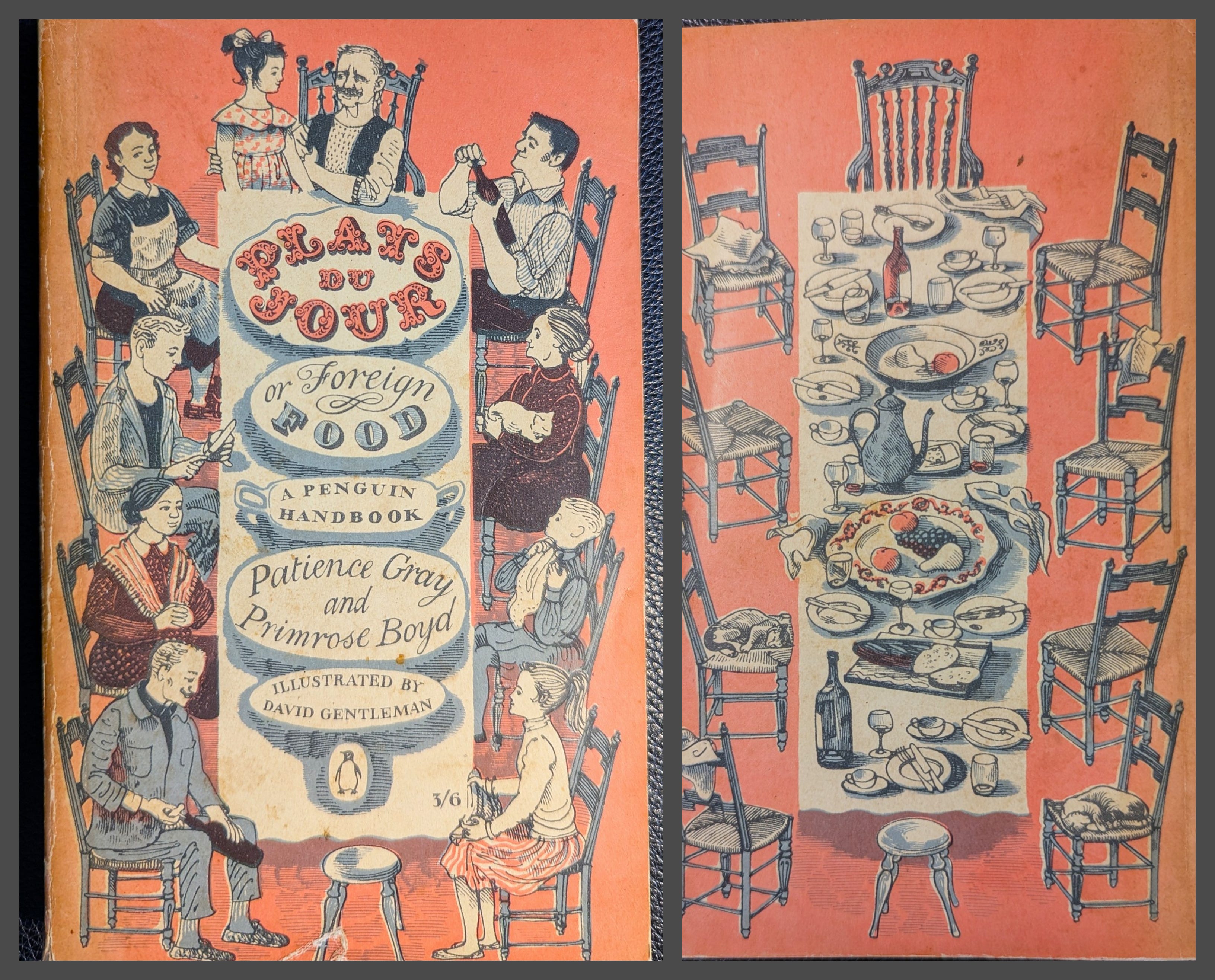
The front and back of the original edition shows a multigeneration, probably French, family with two different wine bottles being corked. Unfortunately the letters on the platters replace the Maine Course (Plat du Jour) in the cover. On the back page, though, we observe the fruit, bread and cheese as well as the sleeping well-fed cats…
Although recently the book came out, unfortunately without the illustrations, I kept looking for the old edition, but not an extremely expensive copy. Fortunately I was recently lucky to find this one at AbeBooks UK at a very reasonable price.
I had written before that Honey From the Weed: Feasting and fasting in Tuscany, Catalonia, the Cyclades, and Puglia, Patience Gray’s final book that describes her life and cooking, is my most inspiring book. For years I was looking for Plats du Jour her first book that she co-wrote with Primrose Boyd —although it seems that she ended up re-writing all the recipes…
The book was published in 1957, after the war and food rationing had ended, and life in the British wealthy homes has changed drastically. Cooks were no longer the norm, and housewives had to cook for their families. Gray proposes cooking and servimg not several but just one nourishing dish, accompanied by a salad, and finishing with cheese and fruit. The subtitle is ‘Foreign Food’ as most of the recipes are inspired by Gray’s travels mostly in France, Italy and Hungary.
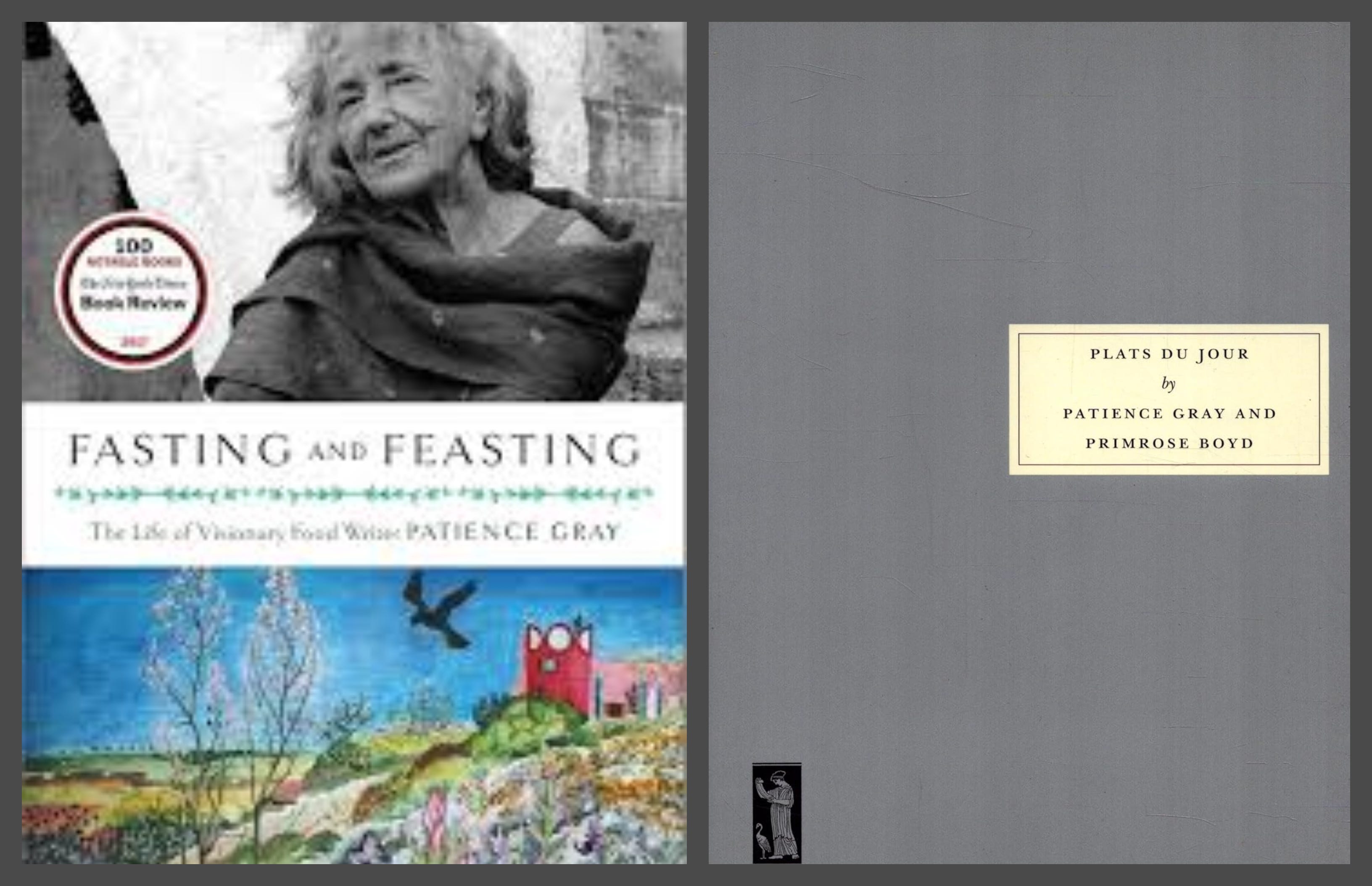
Reading Adam Federman’s very detailed biography Fasting and Feasting: The Life of Visionary Food Writer Patience Gray, we learn a lot about her way of collecting recipes, as the foods she describes are seldom complicated. But sometimes they have interesting twists, like the fish recipe from Brittany that calls for making a sauce from the pan juices: the fish is cooked in nothing more than wine and butter by thickening with “good butter and a little flour.” What the chef omitted to tell her, and Patience only learned by watching him, was that in order to produce a perfectly amalgamated sauce, the butter is first combined with the flour and then divided into small pieces before being whisked into the pan juices. “This is a perfect example of a ‘simple’ recipe conveying no idea of procedure, or an instance of a true Breton’s reluctance to share his secrets,” Patience wrote.
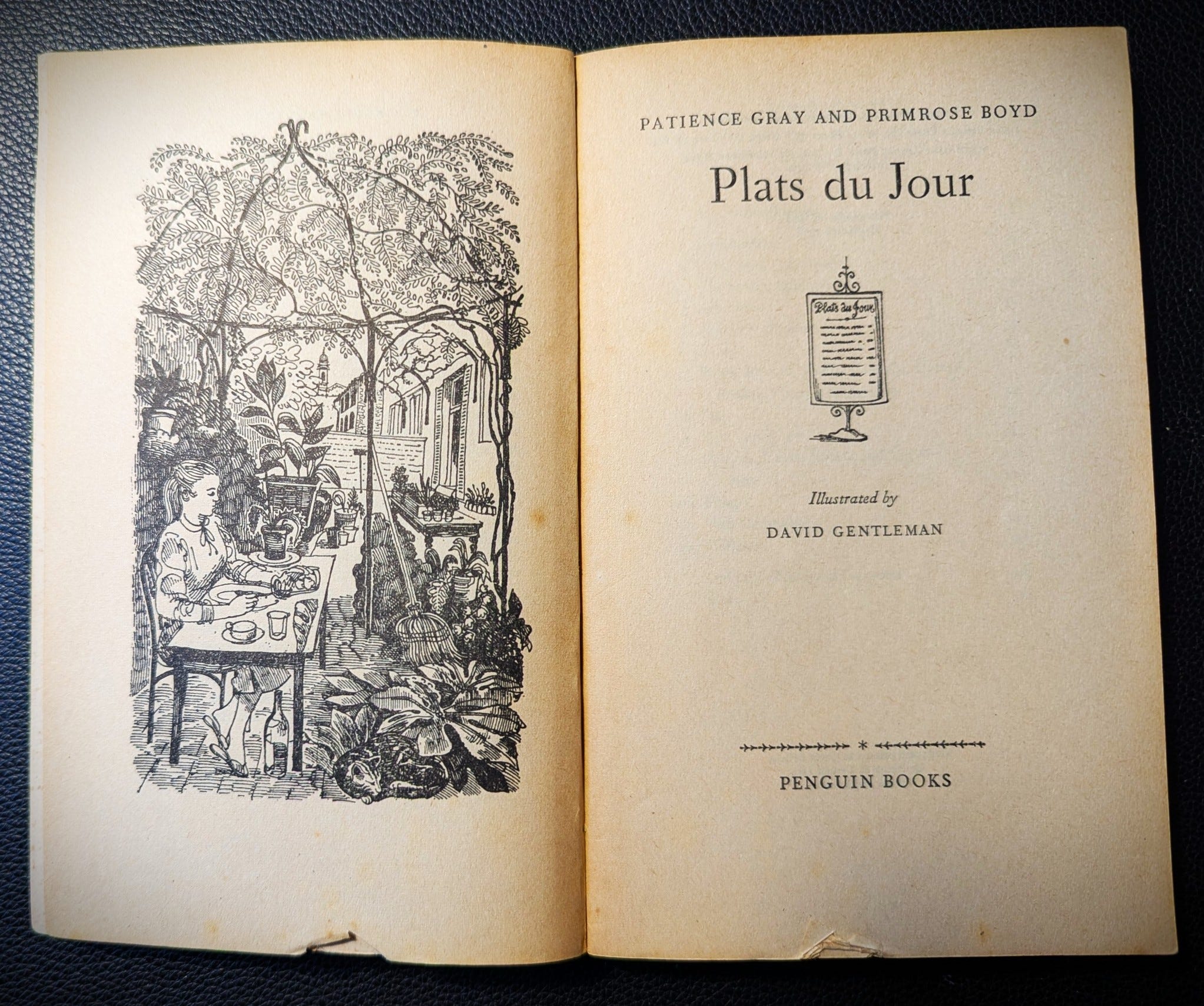
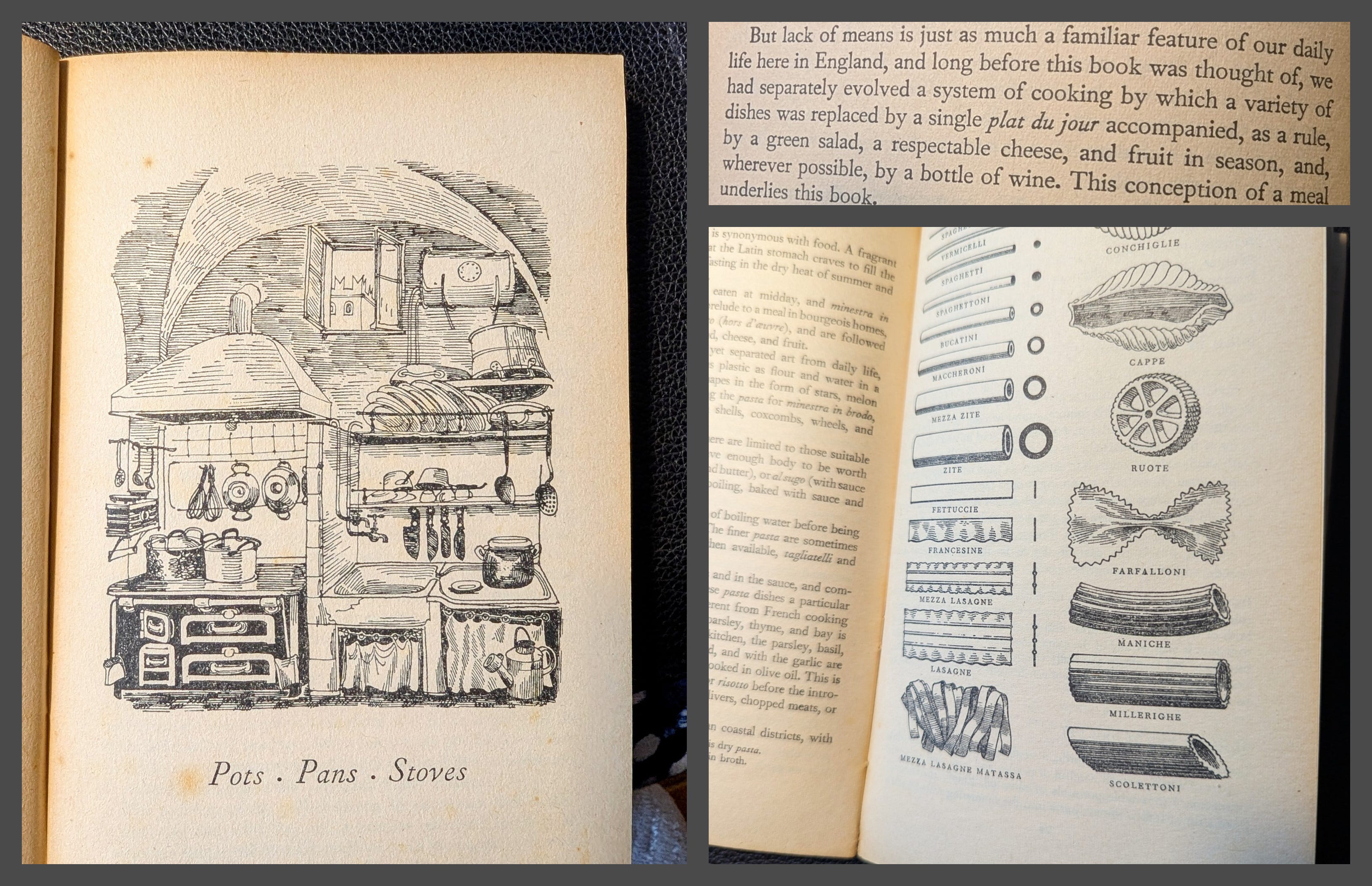
Gray loved casseroles, terrines, pâtés, quiches, pickled tongues, salads, and French cheeses in perfect condition because they were “freshly imported and never refrigerated.” She had an old fridge decorated with red and black harlequin diamonds, which she hardly used and eventually disconnected. “I don’t clutter the place up with trick machinery,” she kept saying.
I think that the book, although it doesn’t have the very detailed recipes we are used to find in modern, especially American, cookbooks, can inspire any beginner cook to create a lovely meal, not just for the family but also for guests, as Gray used to do. She loved to serve the salads on traditional large hand-pained bowls and the wine in her family’s Georgian glasses…
.
Wonderful books, Aglaia - thanks for the reminder.
I will browse my copy tomorrow, thank you for the reminder.