
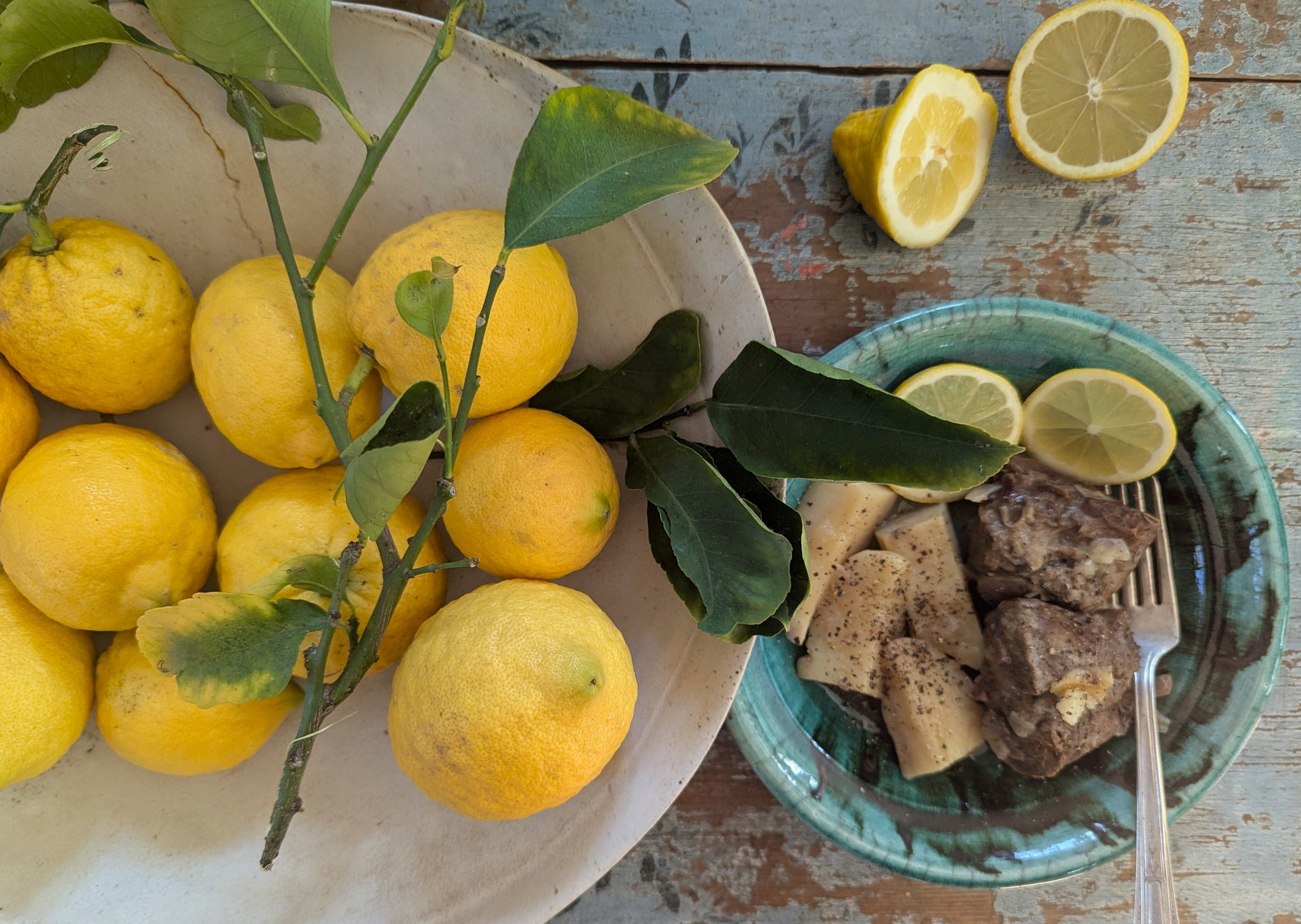
The enticing aroma of this long simmering lemony meat marked the weekends as I was growing up. We ate meat twice a week then, usually keftedes (meatballs) or macaroni with meat sauce, and veal or beef with vegetables or rice on Sundays.
I have associated the aroma of lemonato with the dark, back kitchen in our downtown apartment where we moved when I was 17. Abandoning the home I was born in, on the outskirts of the city, a house surrounded by gardens and trees, wasn’t a traumatic experience. My sister and I looked forward to the brand new apartment across from the Archeological museum.
We could walk to Omonoia and further up to Syntagma on the busy avenues, with the lights and the glamorous shops. Later on the area became a nightmare of traffic, pollution and noise, but when we moved to the luxurious building with the imposing entrance and the large white marble staircase, the area was considered classy. For me the greatest advantage of the apartment was the back, service kitchen elevator. Far from my parents’ bedroom, it was possible to secretly escape some nights and party with my friends…
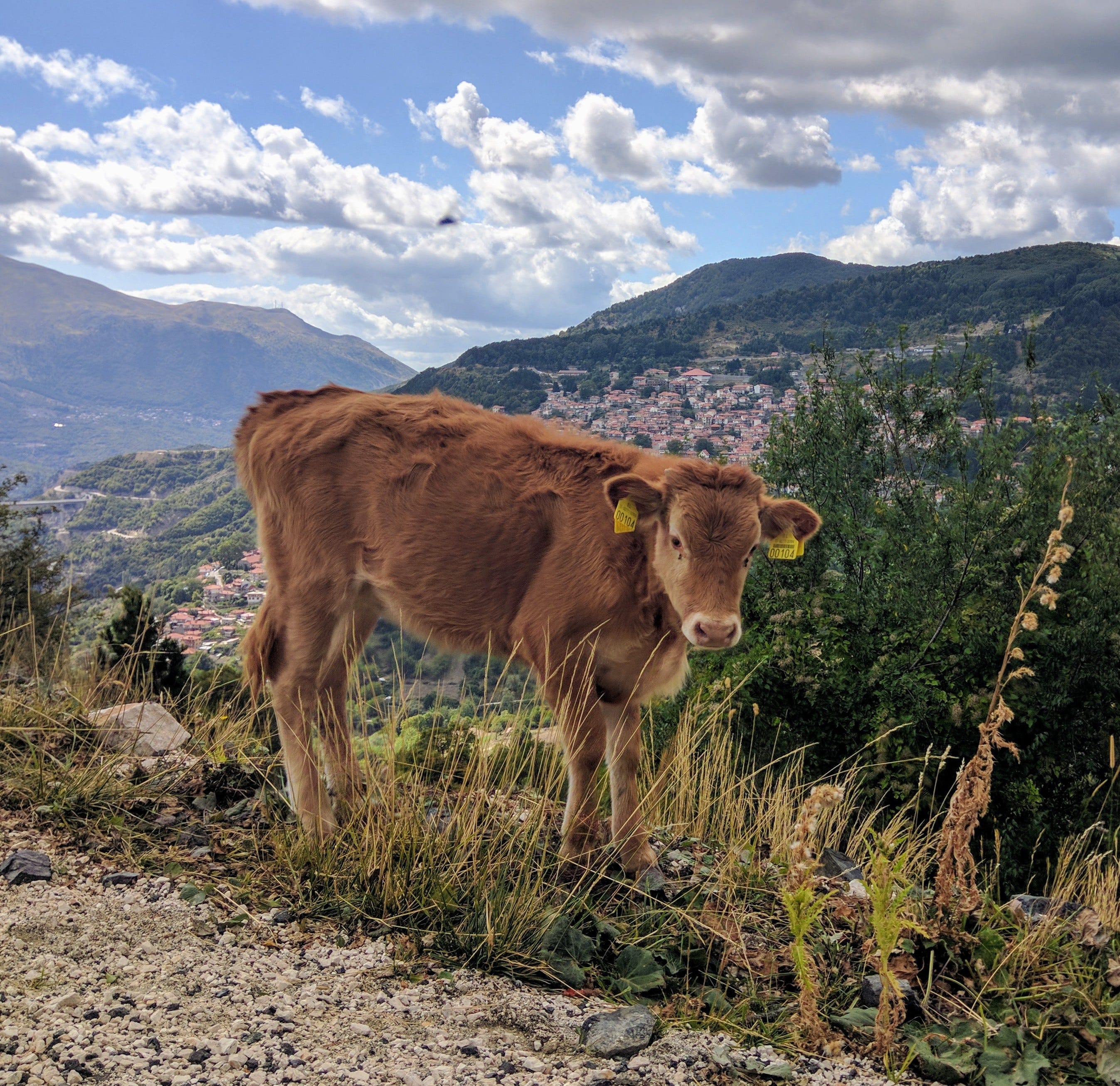
Beef and veal was very tasty but quite tough during my childhood, and continues to be here on Kea where the local free-range veal or cows’ meat is available to those who ask for it and are willing to pay more than the packaged supermarket meat.
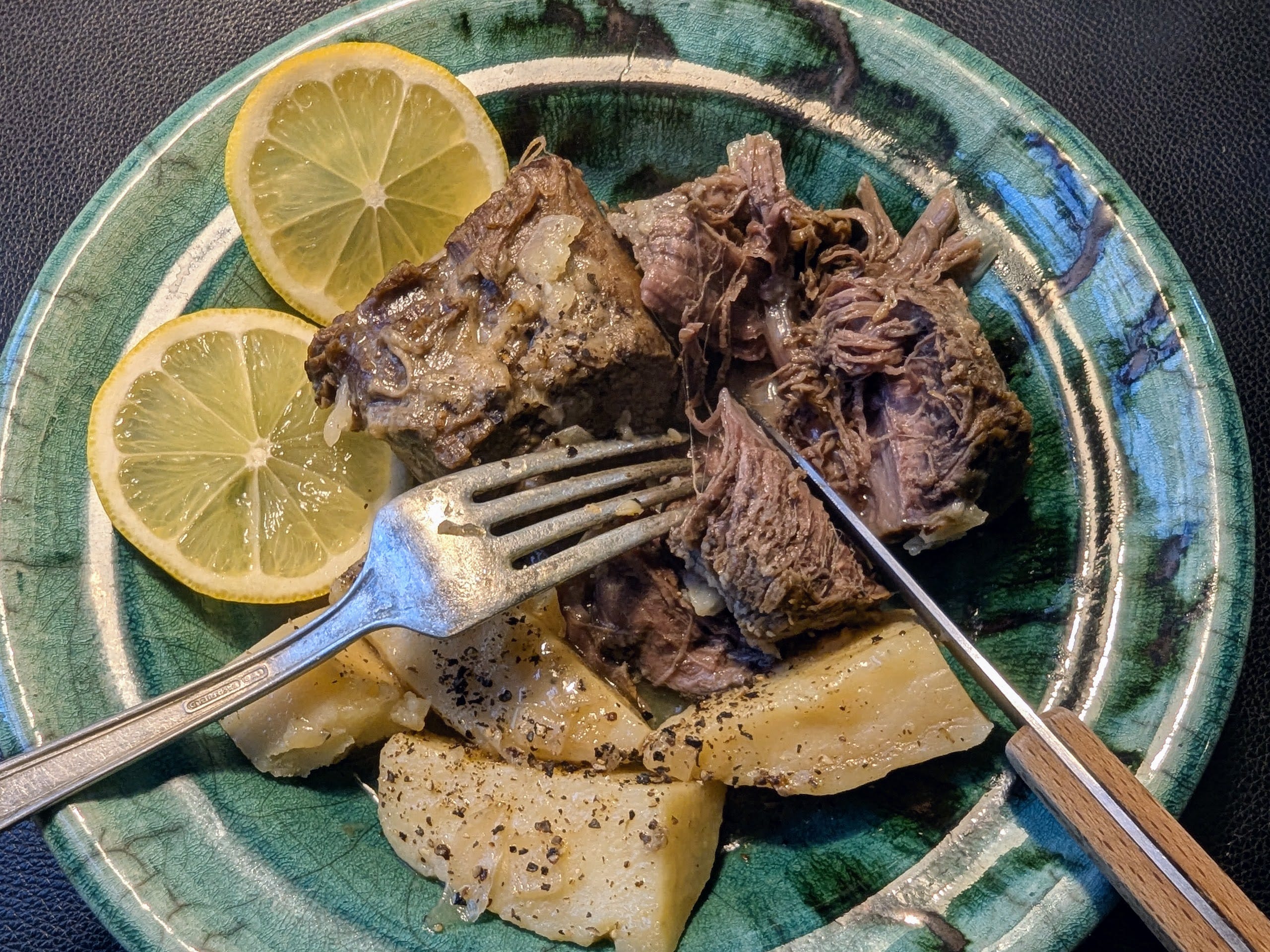
I remember that my mother started cooking our Sunday lunch on Saturday afternoon and the aroma of lemonato filled the kitchen and half the house. The meat simmered in plenty of lemon Juice for at least three hours, then was left on the cooling stove overnight. On Sunday it was simmered for another two-three hours or more together with chunks of potatoes that had previously been briefly fried in olive oil. The flavor of these potatoes that had absorbed the lemony and meaty sauce was sublime!
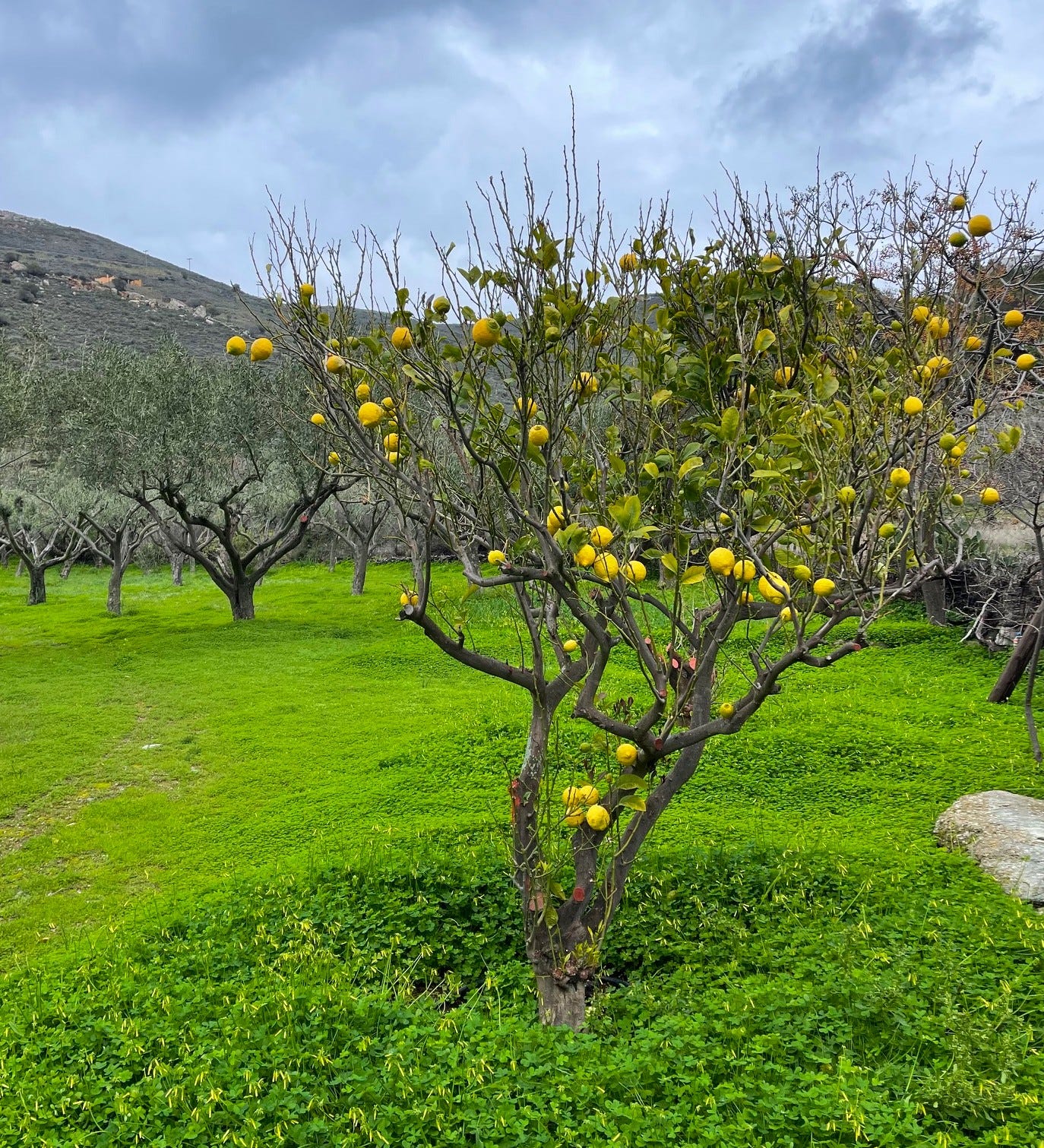
LEMONATO: Beef chanks simmered in lemon juice, with potatoes
Note that I have never cooked lemonato with American meat, which might need less time to cook, so taste after one hour and proceed accordingly.
Serves 4-6
1 kg beef shank cubed
3 tbsp olive oil
1 clove garlic, peeled and sliced
2 medium onions, coarsely sliced
2-3 tablespoons flour
1 1/2 cup fresh lemon juice
2 cups water
Salt and pepper to taste
3-4 waxy potatoes, peeled, cut in chanks, and briefly fried in olive oil.
Honey or sugar (optional)
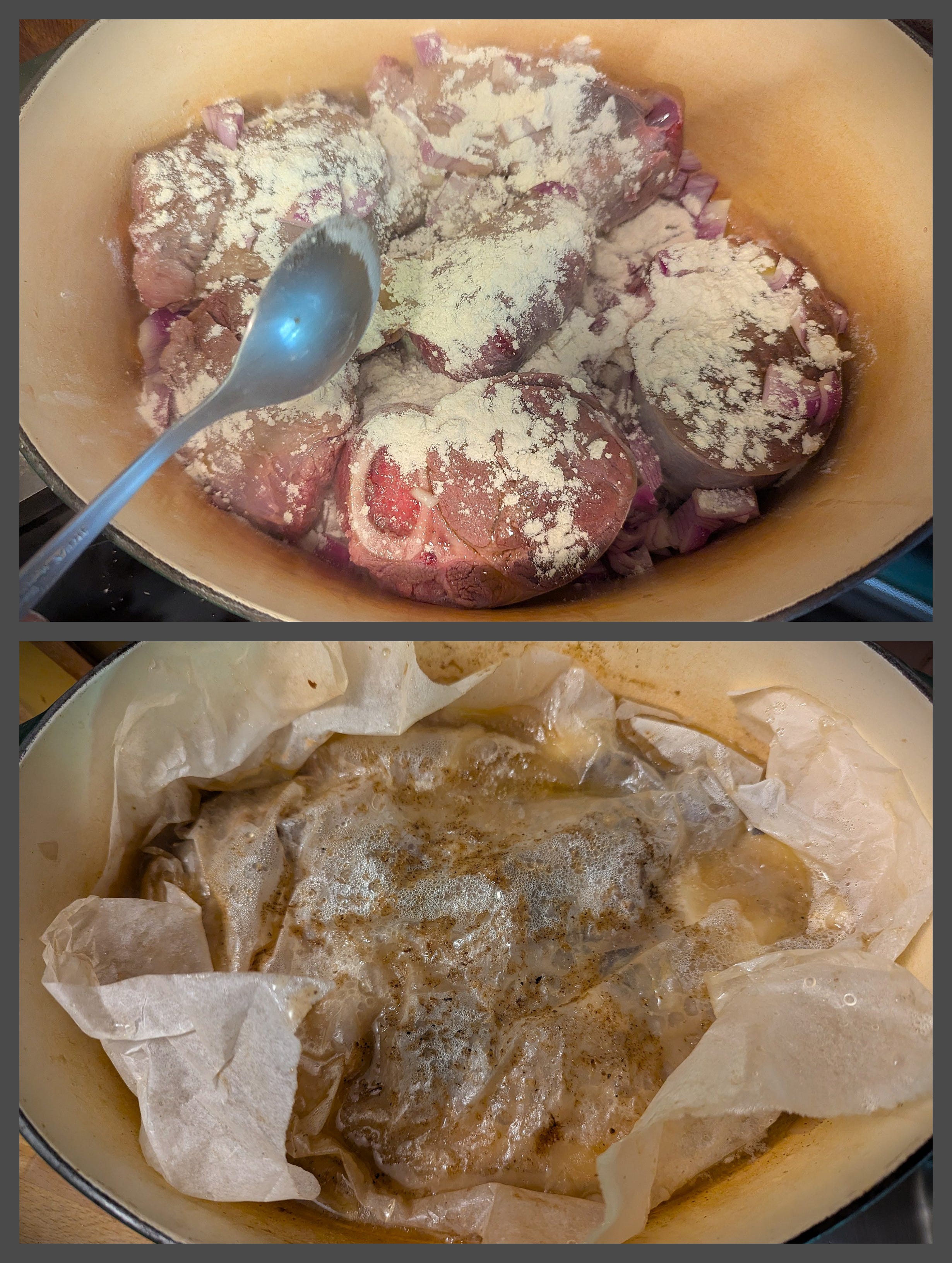
In a heavy pot, over medium-high heat add the olive oil and briefly sauté the onions and garlic, then add the meat and sauté briefly, turning the pieces with tongs.
Sprinkle with the flour, turn the meat chanks a few times, and sauté for a few minutes. Pour in the lemon and water, add about 1 teaspoon salt and 1/2 -1 teaspoon freshly ground pepper. Toss and lower the heat so the meat simmers. Cover with a piece of parchment paper and the pot’s cover, and let the meat cook very slowly for 2-3 hours.
Turn off the heat and let the pot cool overnight. The next morning turn on the heat and simmer for 30 minutes, then check that the meat is almost cooked and tender and add the potatoes in-between the pieces. Simmer for another hour or more and taste. If you find it too lemony add a tablespoon of honey, and more salt and pepper to taste.
Leftovers, reheated slowly the next day are even better…
Aglaia mas, Since I live in the area where you grow up but love my trips downtown and have recently been wandering around Patissia, and not far from the Museum, I wonder whether that magnificent house is still standing. The area has changed so much, so many wonderful old buildings in a state of decay, hotels popping up everywhere, so many boarded up shop fronts. Maybe you follow Nikos Vatopoulos in Katjhimerini or his books -- for non Greeks, Vatopoulos is a wonderful journalist, doing his best to preserve the wonderful neighborhoods and buildings of the 20th century.
And as for the aroma of lemons, irresistible. Didn't Antonia Trichopoulou once tell an Oldways group that the use of lemons was one major thing that set Greek foods apart from the rest of the Mediterranean. But we better make this quickly. As of Monday, the Othodox Lent starts and theoretically we eat no food from any animal that produces bloos, almost vegan but we can eat shellfish, octopus, mussels and other such goodies,
Lovely piece, Aglaia - sounds and looks delicious. Let's hear for brown food. Multicolour is so last year.