
Whenever I travel to the north of Greece, I always look for the sweet pumpkin pie one rarely finds down south where we are. For some reason Aglaia didn’t seem too fond of this version: was it perhaps that it is sometimes made too oily? But she loved pumpkin and squash and cooked it in many ways, both savory and sweet.
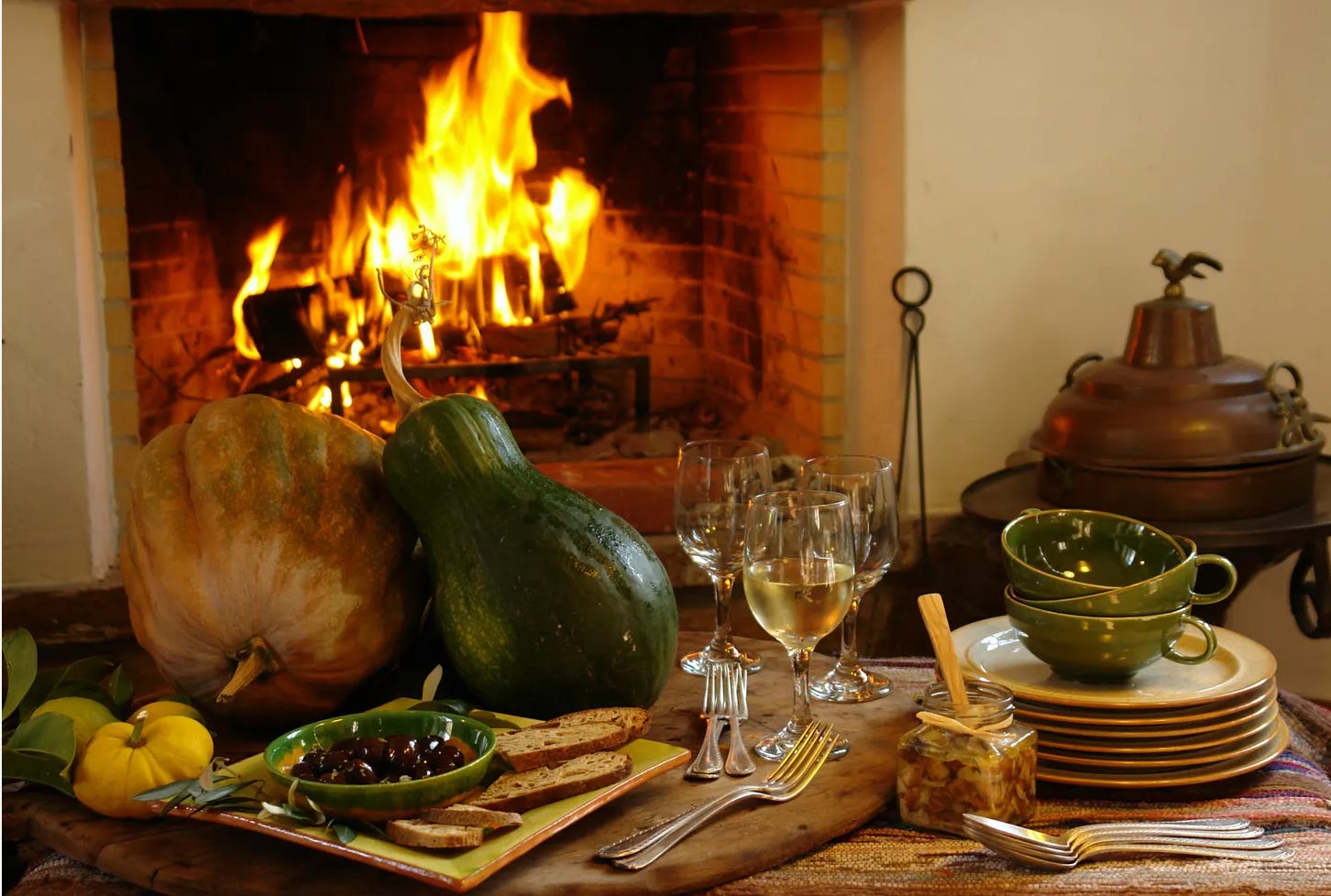
At some point in the fall, home cooks are stuck with an abundance of pumpkin that they have to use, so they improvise. Sweet pumpkin and squash pies are usually not too sweet, and in the north were traditionally eaten as a main course of sorts. This sweet-ish dish for lunch brings to mind medieval cook ways, such as adding some sweetness along with spices like pepper in dishes we today normally would not.
With all this in mind, as I was heading up north for a wedding, I remembered Aglaia had discovered a very interesting recipe from Romania by Irina Georgescu, of which she had spoken with enthusiasm.
I too was excited by the name of this pie, plăcintă cu dovleac. Placenta in Romanian, a Latin origin language, is a pie, as also in ancient Greek plakous, of the same root, is the word for a flat cake.
Words, those naming foods at that, retain some core meaning as they travel through similar geography, even though from country to country they often end up signifying dishes totally different.
(And names in general do not depend on 19th c induced national identities but have been shaped by lager cultural exchanges often occurring in once politically unified, or in some sort of proximity, geographical areas.)
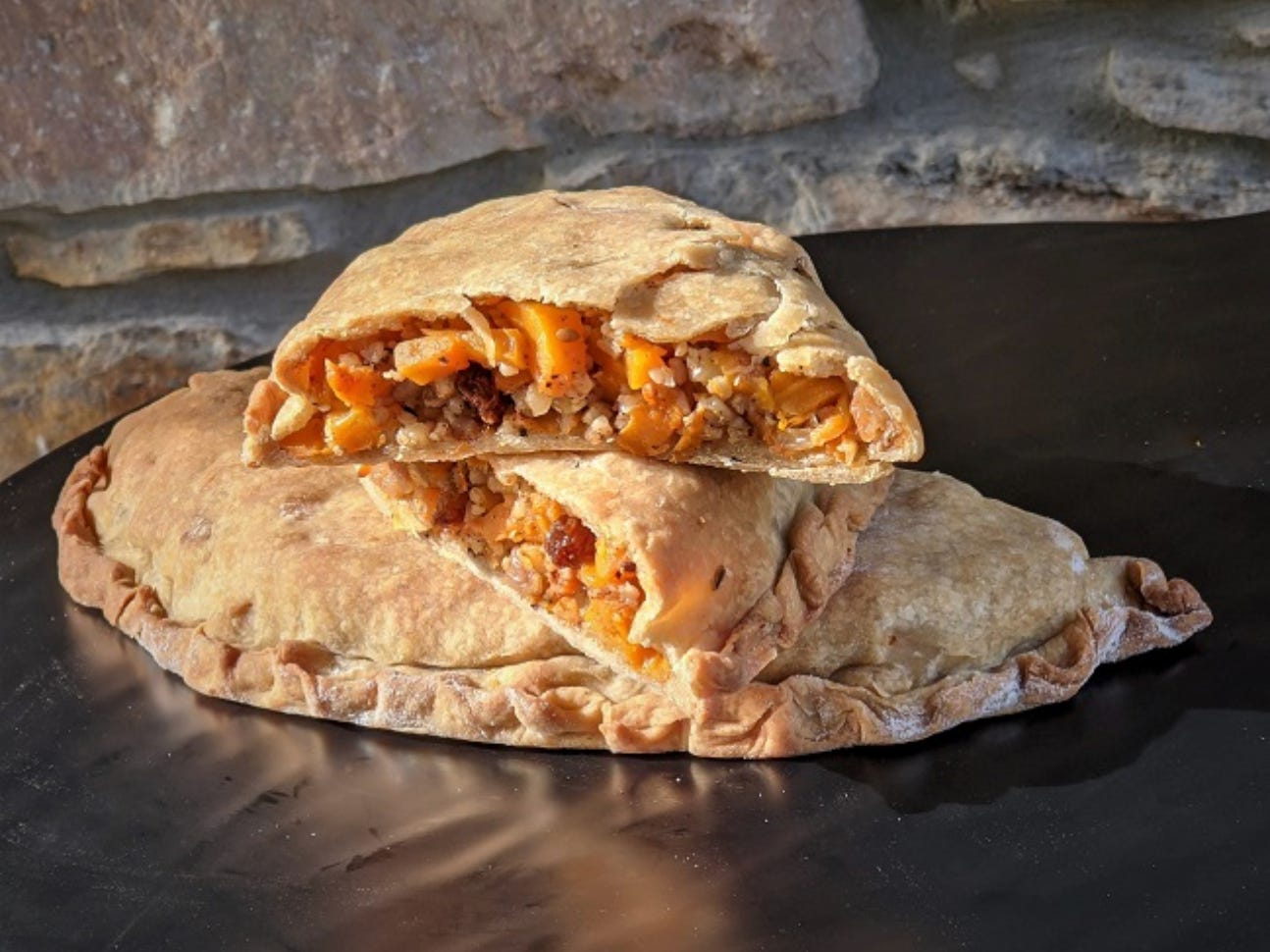
My quest for sweet pumpkin pies moved then from Romania in the north Balkans to Cyprus, in the southeastern-most corner of the EU. I remember when visiting from Cyprus, our friends Marilena and Seth brought us the local juicy kolokotes. A revelation! It was the first time I tried it and I couldn’t stop eating. In this dish squash is combined with bulgur, raisins, pepper and fennel, a combination of ingredients pointing back to quite old cookways.
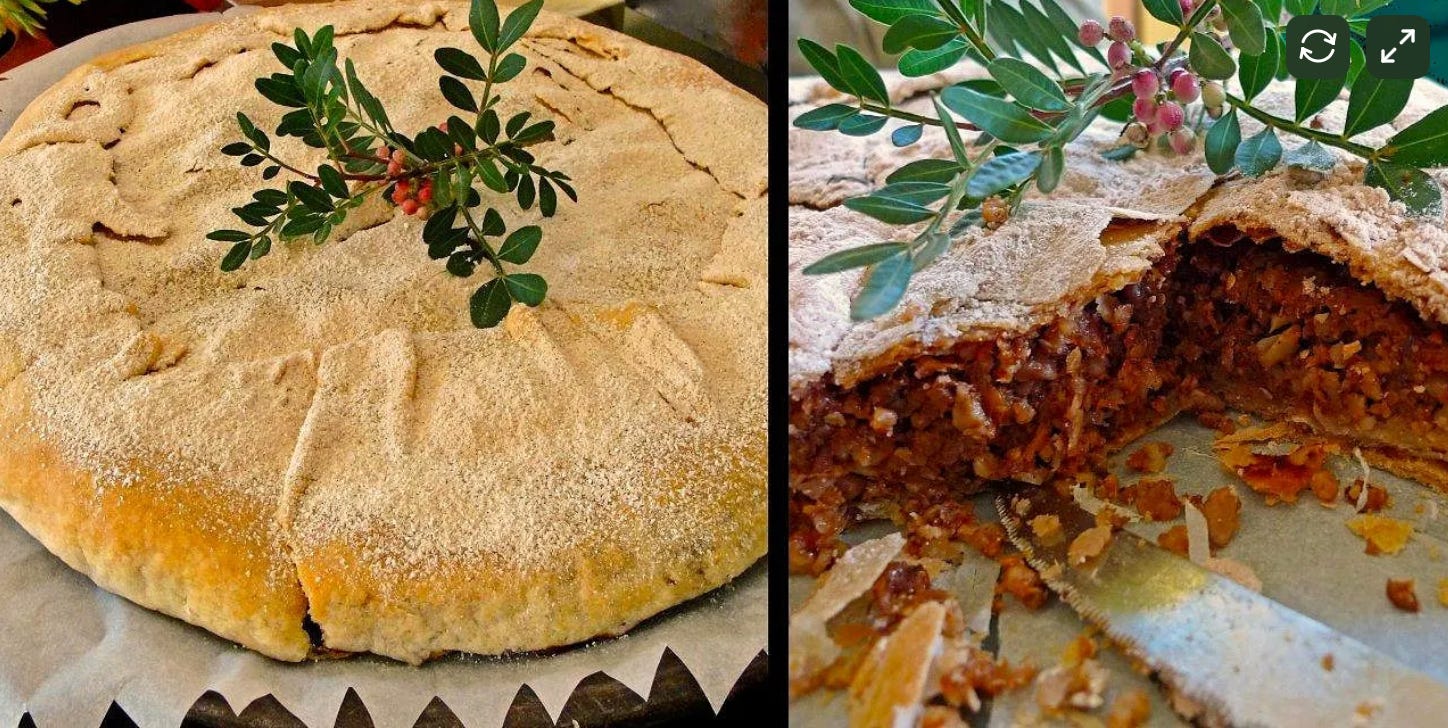
Also with very old roots seems to be yet another recipe for pumpkin pie, this time from the Greek island of Lesbos. The most unexpected addition here is cheese, and not a ricotta type mild cheese but a sharper local cheese cured in olive oil. Paired with the sweetness of pumpkin, cheese enhances the pie’s taste creating an umami-esque effect.
But pies is not the only thing you can do with the abundance of the autumnal orange pumpkin stuff. Aglaia creatively prepared all sorts of risotto, bread, and more, and we both loved the taste of this fruit/vegetable. You can find a few of these recipes here.
(Interestingly, Aglaia’s mother did not like pumpkin dishes because they reminded her or the hunger during the German occupation, when they had to use pumpkin or squash everyday, as it was one of the very few ingredients they could grow in abundance in their big garden in Patisia in Athens.)
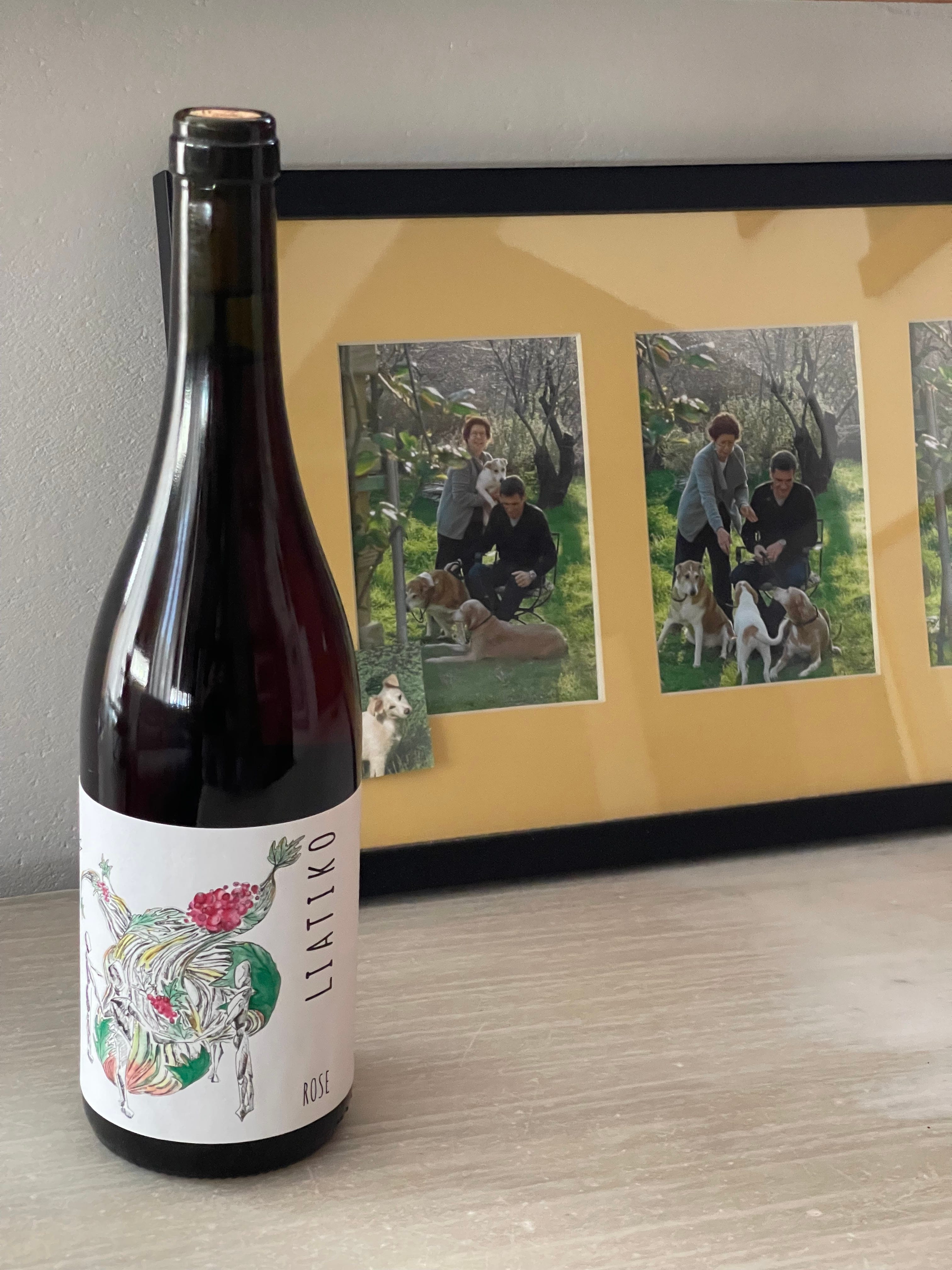
The above dishes taste fresh and sweet-ish, sometimes reaching umami flavors with the addition of cheese. I pair them with one of my favorite Greek minimal intervention rosé wines, the Liatiko by Iliana Malíhin, one of the new wine producers in Greece. Based in the south of Crete, Malíhin explores several local grape varieties, in this case liatiko, and makes this mild tannin fruity wine with an enchanting character.
Thank you so much Costas, it’s wonderful to see you carrying on the legacy and hearing from your perspective as we came to “know” you through Aglaia’s sharing of stories. Look forward to more!
Jim Macris
Your comment on pumpkin as famine-food v. interesting. There's loads of examples: maize-meal (polenta) still disliked as itwas sent from Italy to the western isles of Scotland in the aftermath of the potato-blight - 1880's or thereabouts.